Boneless Prime Rib Recipe

This post may contain affiliate links, read my disclaimer.
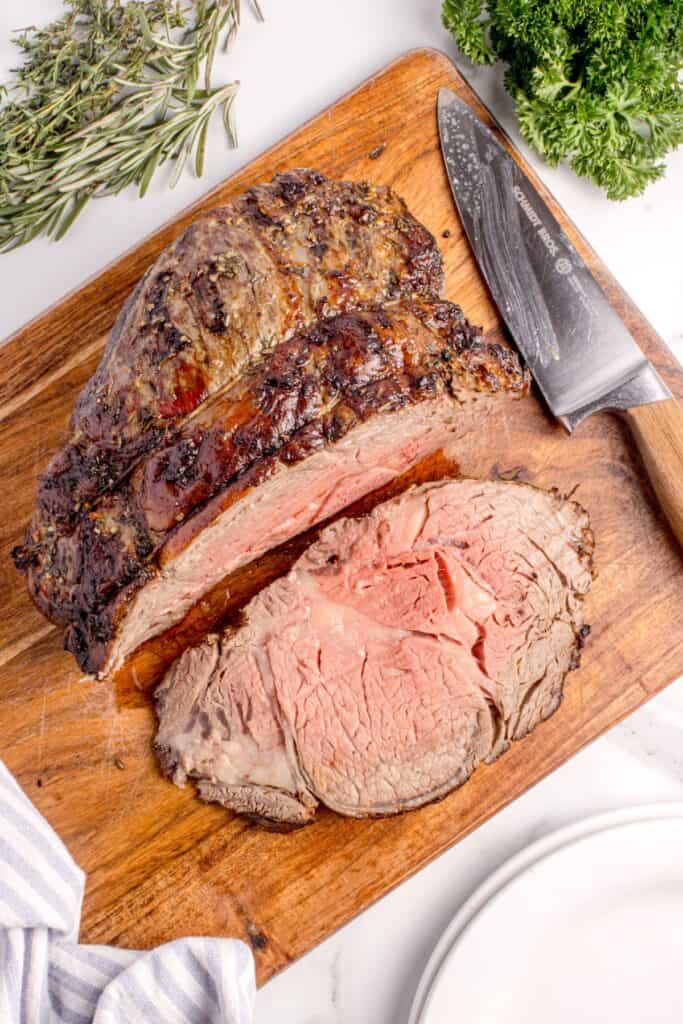
My boneless prime rib recipe is flavored with a homemade garlic herb butter that helps to lock in the moisture and flavor. I start the roast at a high temperature to form a beautiful crust, then cook low and slow until perfectly tender and juicy.
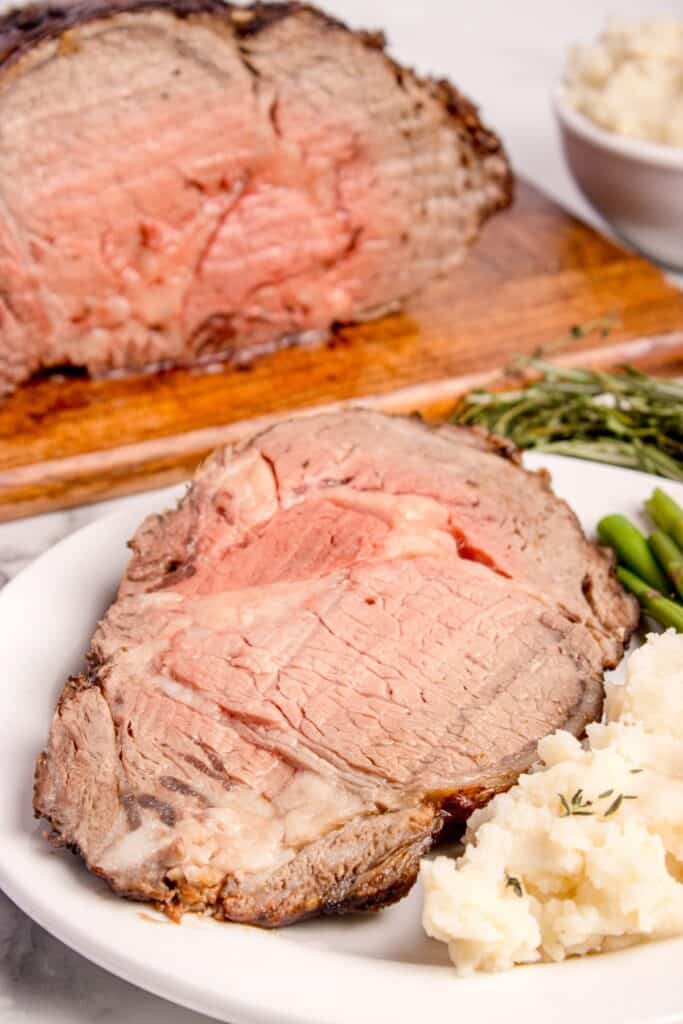
My Favorite Way to Make Prime Rib Roast
My boneless prime rib recipe is one of my favorites, making any regular weeknight dinner feel like a special occasion.
The first time I served prime rib to my two kids for Christmas Eve, my son, Connor, was under the impression that it was a super fancy, difficult meal to make. He was shocked when I told him that it was made with just a handful of simple ingredients.
My daughter, Leah, was just as surprised and couldn’t get over how tender it was. Needless to say, they both loved it, and now I make it for them every Christmas Eve and randomly through the year to surprise them.
Looking for more beef recipes? Try my slow cooker flank steak, round steak, or Salisbury steak. Or, for another delicious prime rib recipe, give my air fryer prime rib a try next.

Prime Rib Roast Recipe Ingredients
- Boneless prime rib roast – I use about 4 ½ to 5 pounds of meat for my recipe. Bone-in rib roast can be used, and the bone can easily be removed.
- Softened butter – Butter will infuse rich flavor into the meat while also helping it form a perfect crust on the outside. Unsalted butter is my preference here since the recipe already calls for salt.
- Fresh rosemary – Adds an earthy and slightly peppery taste to the roast.
- Fresh thyme – This slightly minty herb brings warmth and additional earthy notes to the dish.
- Garlic – Freshly minced garlic will give the boneless prime rib recipe a bold, savory taste.
- Kosher salt & black pepper – Enhance the natural flavor of the prime rib. The salt draws out excess moisture, creating that crust on the outside, while the pepper adds a subtle warmth.
How to Cook a Prime Rib Roast in the Oven
A full printable version of this recipe with ingredient measurements is available at the bottom of this post.
STEP ONE: Remove the roast from the refrigerator and let it sit at room temperature for 1 hour before cooking.
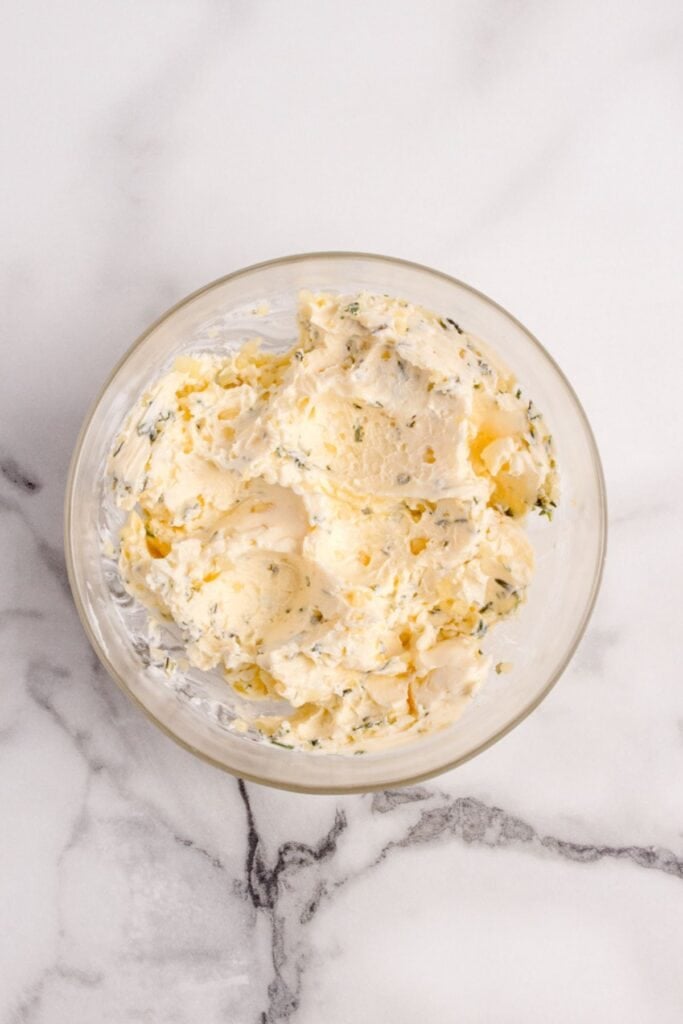
STEP TWO: Prepare the herb butter, mixing softened butter with rosemary, thyme, garlic, salt, and pepper.

STEP THREE: Pat the meat completely dry with paper towels, then spread the herb butter evenly over the entire roast until the whole surface is coated.
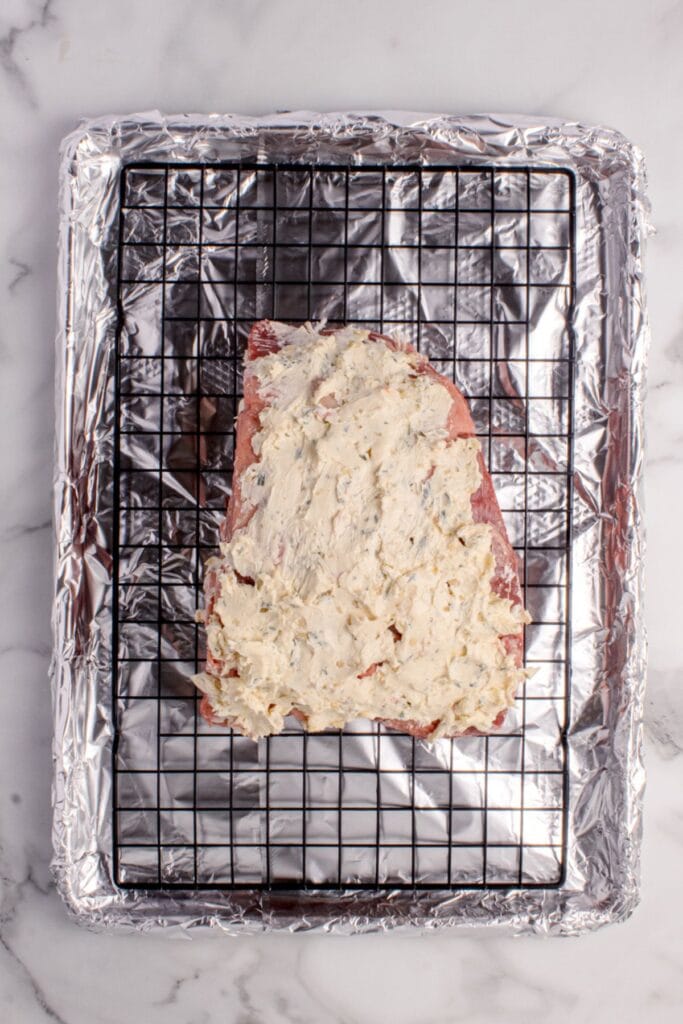
STEP FOUR: Place the roast fat side up on a wire rack set in a rimmed baking sheet or roasting pan. Insert a meat thermometer into the thickest part of the roast, making sure it doesn’t touch any fat. Roast it at 475 degrees F for 10 minutes to develop a brown crust.
STEP FIVE: Next, reduce the oven temperature to 325 degrees F and continue roasting until the internal temperature of the roast reaches 5 to 10 degrees F below the target doneness. Mine took an hour and 55 minutes for a 4 1/2 pound prime rib.
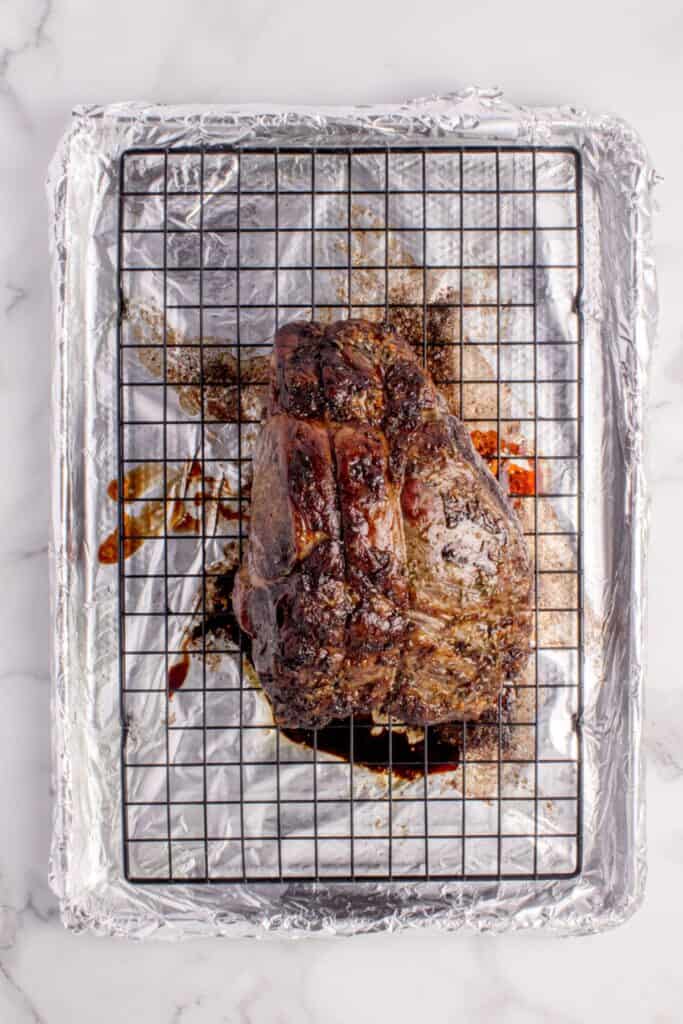
STEP SIX: Take the roast out of the oven and place it on a cutting board. Loosely tent it with aluminum foil and let it rest for 20 to 30 minutes.
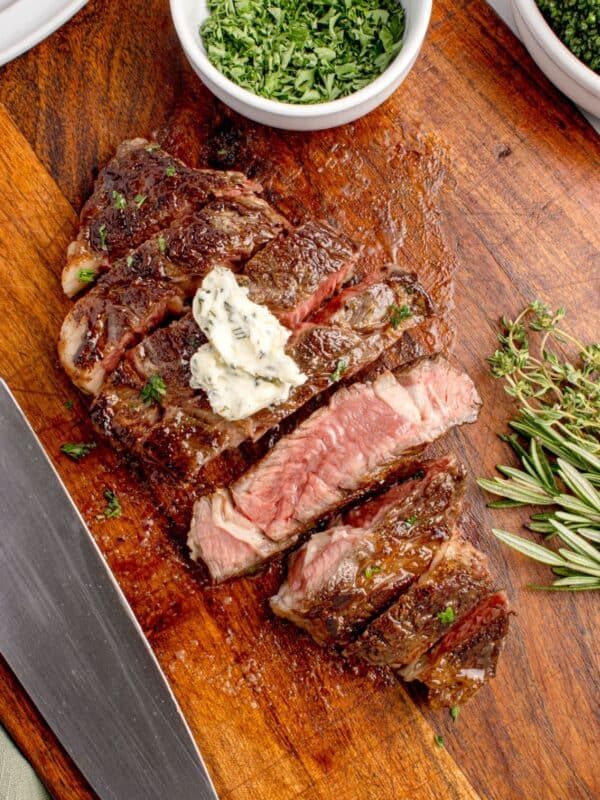
STEP SEVEN: Use a sharp knife to slice the roast against the grain into ½- to ¾-inch thick slices. Serve with sides of choice and enjoy!

Tips for the Best Boneless Prime Rib Recipe
- Check internal temperature after 1 hour. Be sure to pull the roast from the oven before it reaches the desired final temperature, since the temperature will rise 5 to 10 degrees F while resting.
- Roasting on a wire rack will prevent the meat from steaming in its own juices and ensure that there is even air circulation for better browning.
- I like to season the meat with kosher salt and leave it to dry brine in the refrigerator for 12 to 24 hours before cooking. I find it makes the roast even more tender and flavorful!
- Using kitchen twine to tie the roast at 1 ½–2 inch intervals will help it maintain a uniform shape and cook evenly. Just be sure to remove the twine before slicing and serving.
- If the roast has a thick fat cap, lightly score it in a crosshatch pattern with a sharp knife. This will help the fat render and promote even browning.
- Don’t skip the resting, either! This is my top tip for ensuring a tender, juicy roast.
Prime Rib Roast Variations and Substitutions
- If “prime” grade beef is unavailable, my recommendation would be choice-grade boneless rib roast or ribeye roast instead. Just make sure the cut of meat has good marbling for tenderness and flavor.
- Dried rosemary and thyme can be substituted if needed or preferred. Since dried herbs are stronger than fresh, I reduce the amount by half.
- To add some heat, I season the meat with a dash of cayenne pepper. My husband Ben loves spicy food, so this is his favorite variation!
- Garlic powder can be used instead of fresh garlic if desired.
What to Serve with My Boneless Prime Rib Roast Recipe
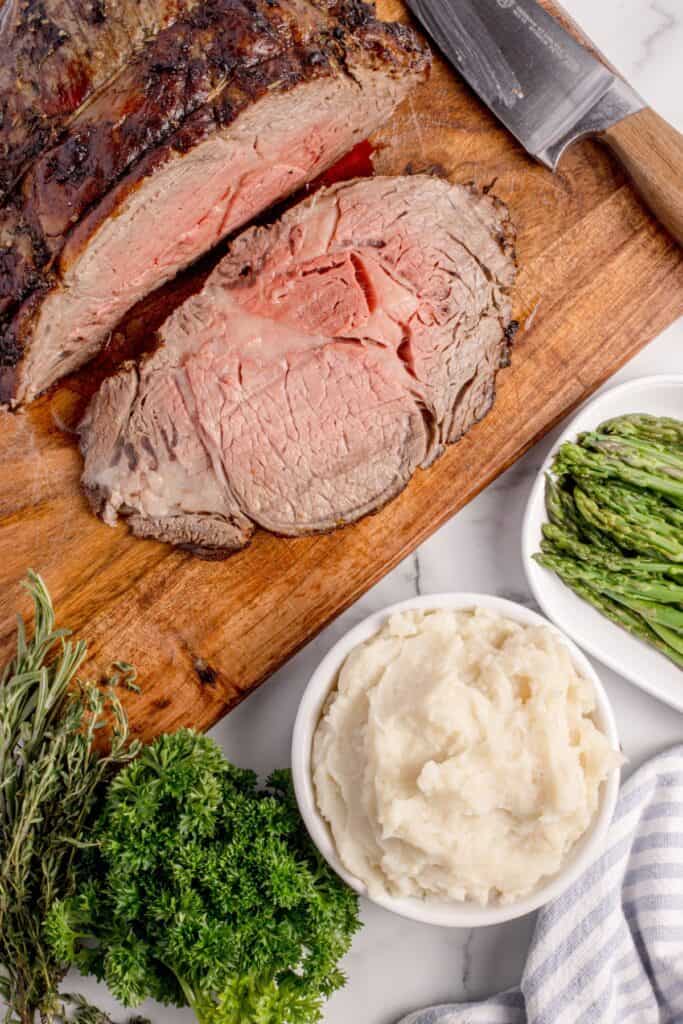
My prime rib pairs wonderfully with simple side dishes like my rosemary mashed potatoes, roasted baby carrots, roasted asparagus, and my gouda mac and cheese!
I also love serving it with classic sauces, including creamy my horseradish sauce recipe or a savory au jus dip made from the drippings.
Boneless Prime Rib Recipe FAQs
How do I know when my boneless prime rib roast is done?
An instant-read or probe thermometer makes it easy to check when the roast is ready! Remove the meat from the oven when the thermometer measures anywhere between 115 and 145 degrees F, depending on the desired doneness. I pull mine at about 130 degrees F to serve it medium-rare.
How should I store leftovers?
I store my leftovers in an airtight container and keep them in the refrigerator for up to 4 days. For longer storage, I freeze the meat for up to 3 months. Wrapping it tightly in plastic or vacuum sealing it keeps it as fresh as possible.
How do I reheat leftover prime rib roast?
My favorite ways to reheat prime rib are either on the stove top or in the oven (covered with foil) at a low temperature between 250 and 275 degrees F. For both of these methods, adding a splash of water or broth will help the meat stay moist and prevent drying out.
More Easy Holiday Recipes
- Spiral ham
- Easy biscuit recipe
- Boneless leg of lamb recipe
- Watergate salad
- Braised beef short ribs
- Pineapple stuffing
- Tri tip in the oven
Easy Boneless Prime Rib Recipe
Equipment
Ingredients
- 4½–5 pound prime rib roast, boneless
- ½ cup unsalted butter, softened
- 1 teaspoon fresh rosemary, finely chopped
- 1 teaspoon fresh thyme leaves
- 4 cloves garlic, minced (about 2 teaspoons)
- 2 teaspoons kosher salt
- 1 teaspoon black pepper, freshly ground
Instructions
- Remove the roast from the fridge 1 hour before cooking to allow it to come to room temperature.
- In a small bowl, stir together the softened butter, rosemary, thyme, garlic, salt, and pepper until fully combined. Set it aside.
- Pat the roast completely dry with paper towels.
- Spread the garlic herb butter evenly over the entire roast, making sure every surface is well coated.
- Preheat the oven to 475 degrees F (245 degrees C).
- Place the roast fat side up on a wire rack set in a rimmed baking sheet or roasting pan and roast it for 10 minutes to develop a a brown crust.
- Reduce the oven temperature to 325 degrees F (165 degrees C), checking the roast's internal temperature starting at about an hour. It should take between 1 hour and 45 minutes and 2 hours to roast.
- Take the roast out of the oven and place it on a cutting board. Loosely tent it with aluminum foil and let it rest for 20–30 minutes so the juices can redistribute.
- Using a sharp knife, slice the roast against the grain into ½- to ¾-inch thick slices.
Notes
- My 4 1/2 pound prime rib took an hour and 55 minutes to cook to medium rare.
- Check the internal temp after 1 hour. Be sure to pull the roast from the oven before it reaches the desired final temperature, since the temperature will rise 5 to 10 degrees F while resting.
- Roasting on a wire rack will prevent the meat from steaming in its own juices and ensure that there is even air circulation for better browning.
- You can also season the meat with kosher salt and leave it to dry brine in the refrigerator for 12 to 24 hours before cooking. It makes the roast even more tender and flavorful!
- Using kitchen twine to tie the roast at 1 ½–2 inch intervals will help it maintain a uniform shape and cook evenly. Just be sure to remove the twine before slicing and serving.
- If the roast has a thick fat cap, lightly score it in a crosshatch pattern with a sharp knife.
- Don’t skip the resting so the juices can redistribute!
- Temperature Guide:
- Rare: Remove at 115–120°F (final temp 125°F)
- Medium-Rare: Remove at 125–130°F (final temp 130–135°F)
- Medium: Remove at 135–140°F (final temp 140–145°F)
- Medium-Well: Remove at 145°F (final temp 150°F)
Nutrition
This nutrition information is based on the exact products I used in this recipe. Brands and sizes of products could alter exact nutrition and should always be calculated independently.
Like this? Leave a comment below!