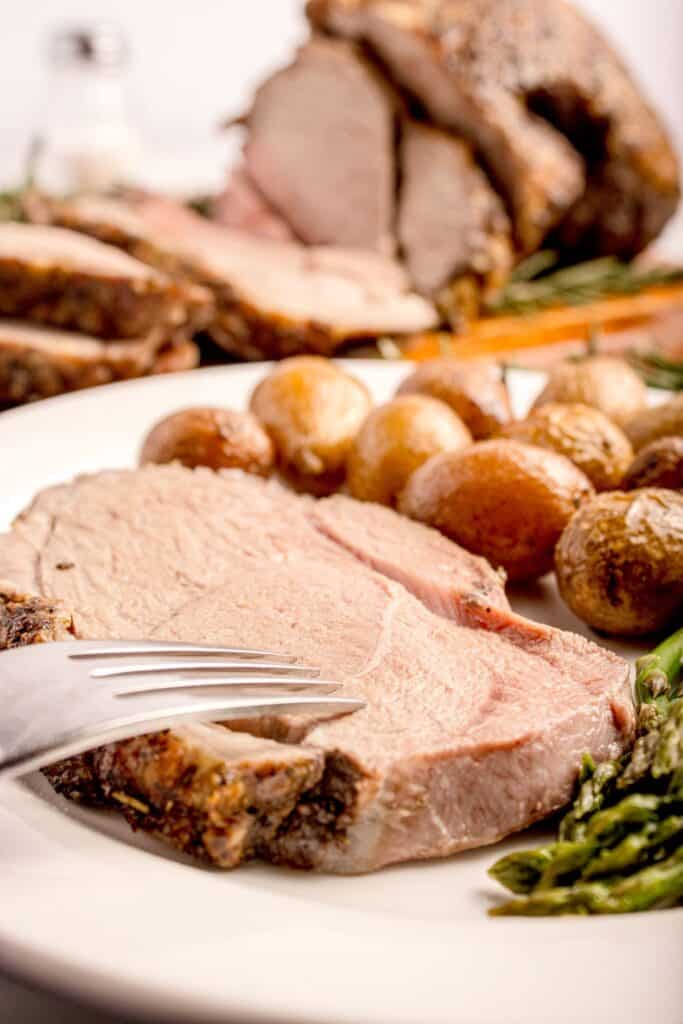
My boneless leg of lamb recipe features the delightful flavors of fresh rosemary, Italian seasoning, garlic powder, and lemon zest. I roast the lamb in the oven low and slow to get tender, juicy results every time!
This post may contain affiliate links. If you click on a link and make a purchase, I may receive a small commission at no extra cost to you. For more information, please read my disclaimer.
My Easy Leg of Lamb Recipe
My boneless leg of lamb recipe is one of the holiday dishes I’m most proud of. It’s aromatic, flavorful, and serves as a reminder that simple seasoning and ingredients can go a long way and make some of the best meals.
I wanted to find a way to make a leg of lamb recipe that was elegant to make on Easter and Christmas, but also easy enough to make between Easter egg hunts and opening gifts. That’s why my recipe only takes 15 minutes of prep before getting it into the oven and letting it do the rest of the work.
There are many different ways to prepare and cook lamb, but roasting low and slow is my favorite method because of the beautiful tenderness it produces.
Looking for more holiday main dishes? Try my recipes for boneless turkey breast, roasted chicken, beef wellington, spiral ham or braised short ribs!
Roast Leg of Lamb Ingredients
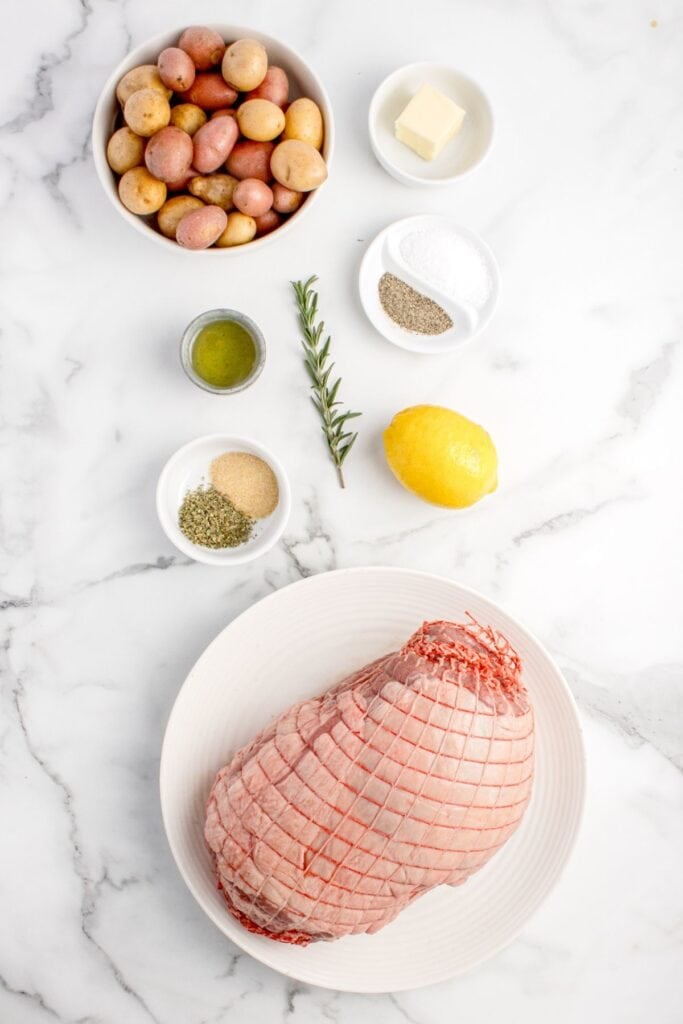
- Boneless leg of lamb – Lamb leg is a lean cut known for its savory, earthy, and slightly sweet taste. I use just under 5 pounds for this recipe.
- Garlic powder – Infuses savory flavor into the meat without the risk of burning, like freshly minced garlic would.
- Kosher salt & pepper – Simple seasonings that turn the dial up on all the other flavors.
- Rosemary – This woody herb is commonly paired with lamb because of how well it complements the richness of the meat. I prefer fresh rosemary, but dried will work fine too.
- Italian seasoning – A classic blend of basil, oregano, and parsley. Some contain rosemary or thyme, which is just fine for this recipe!
- Lemon zest – For a touch of brightness that rounds everything out.
- Olive oil & butter – Add richness and depth while also helping the seasoning stick.
- Baby potatoes – Such an easy way to turn a main into a rounded meal. They soak up extra flavor from the lamb too!
How to Cook Boneless Leg of Lamb
A full printable version of this recipe with ingredient measurements is available at the bottom of this post.
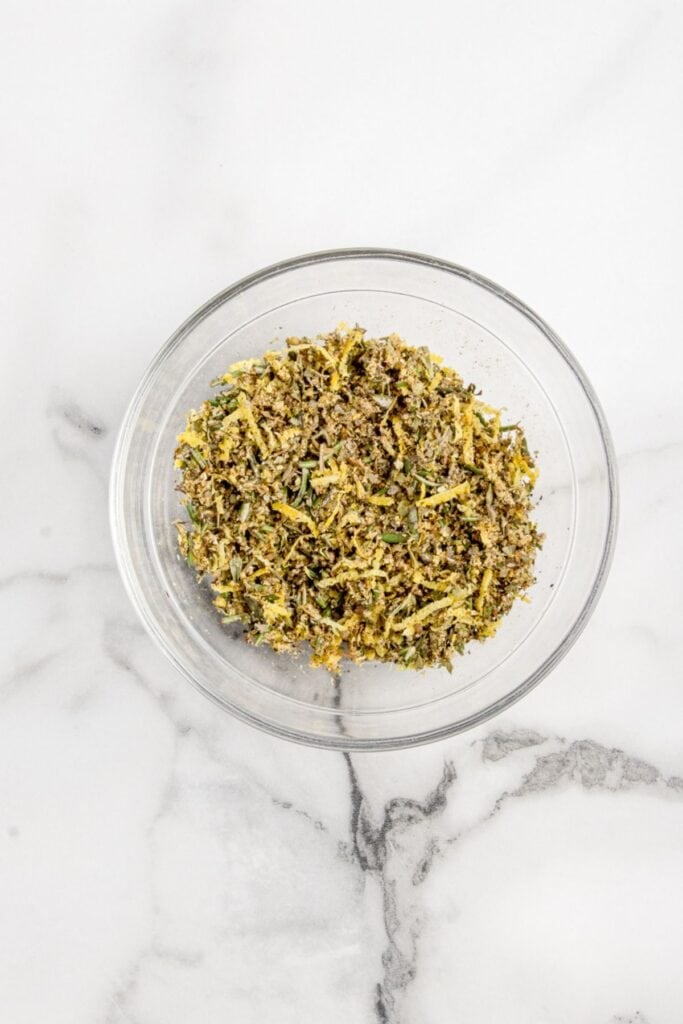
STEP ONE: While the oven preheats to 275 degrees F, combine all of the seasoning and lemon zest in a bowl, mixing until well combined.
STEP TWO: Next, pat dry the lamb leg with paper towels and tie it with twine so it doesn’t lose its shape. Then, coat the surface with olive oil and the seasoning blend, pressing gently to help everything stick.
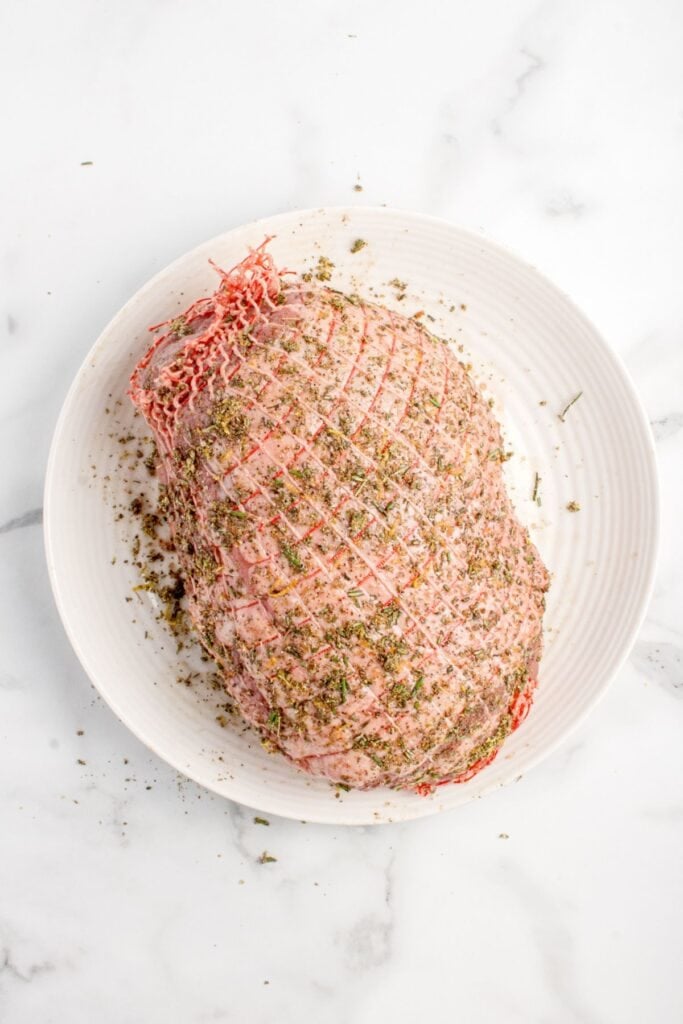
STEP THREE: Place the lamb on a bed of potatoes or on a wire rack over a roasting pan, fat side up. Cook it for approximately 2 ½ to 3 hours, until a safe internal temperature and the desired doneness have been achieved.
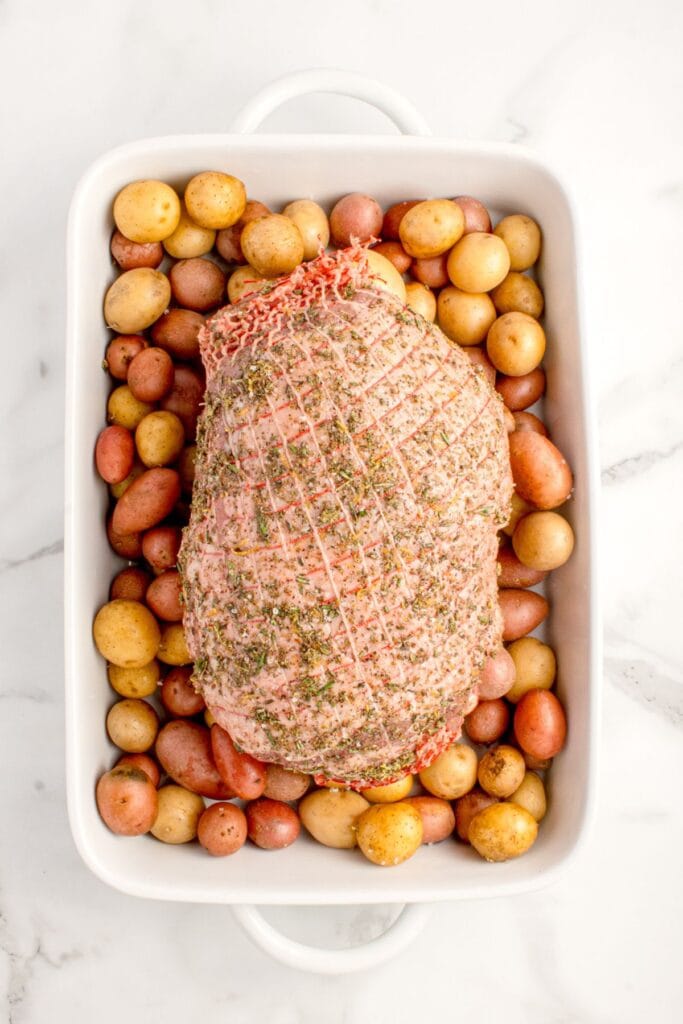
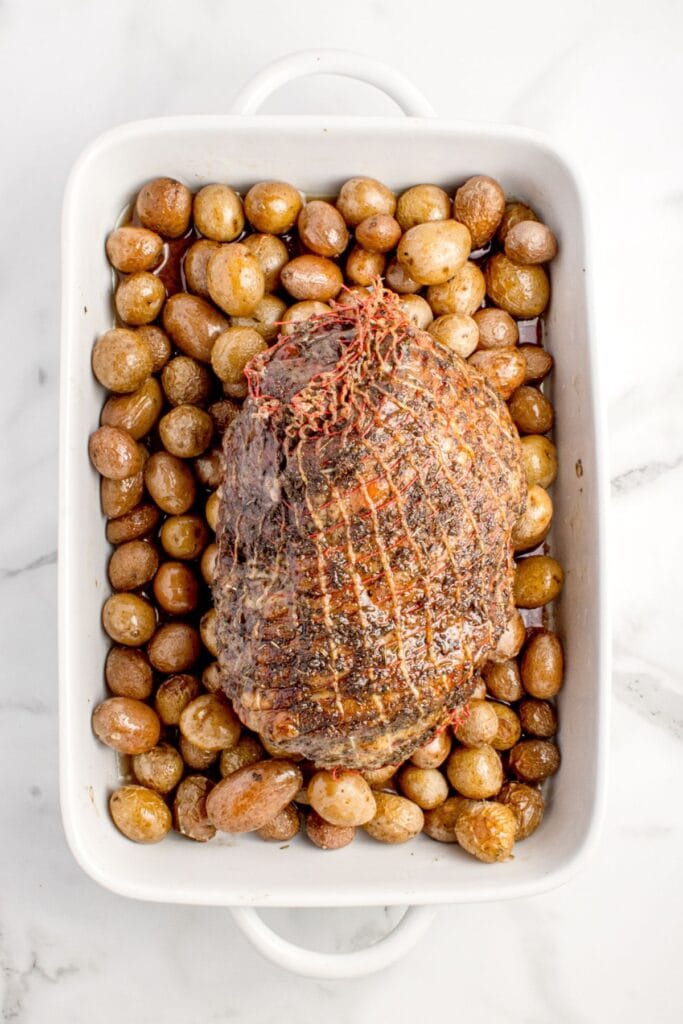
STEP FOUR: During the final 10 to 15 minutes of roasting, brush the lamb with the melted butter. This step is optional, but I never skip it. It makes every bite so much richer!
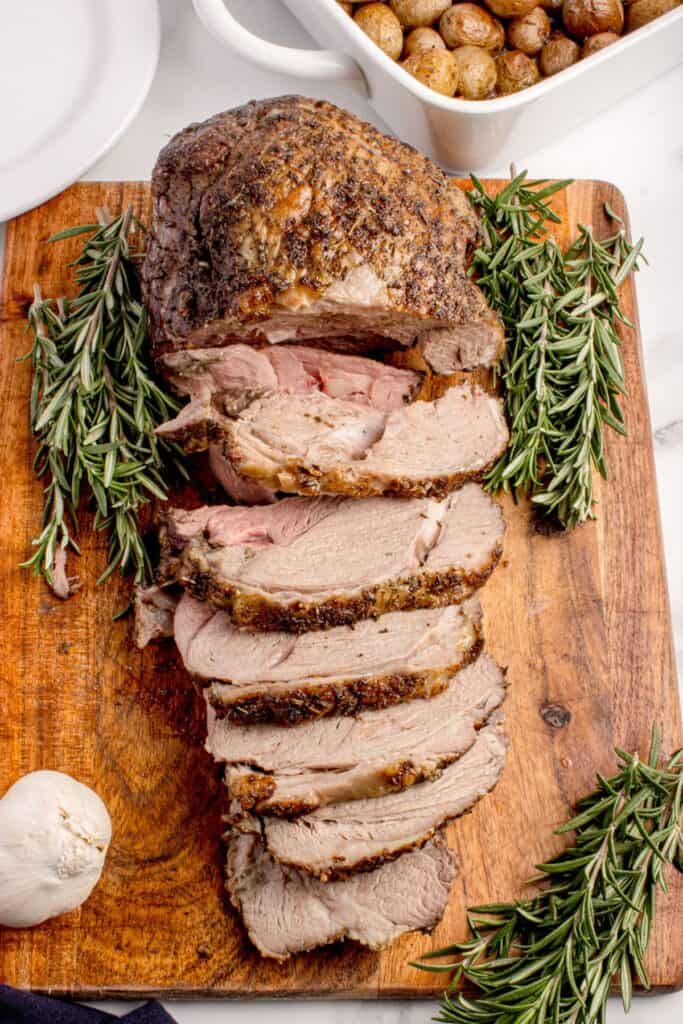
STEP FIVE: Remove the lamb from the oven and loosely tent it with foil. Let it rest for 20 minutes before removing the twine and slicing.
Tips for the Best Boneless Leg of Lamb Recipe
- Always start with room temperature lamb to ensure even cooking. While the oven is preheating is the perfect time to let it sit out.
- An instant-read meat thermometer makes it easy to check for doneness. I usually start checking the temperature 2 hours into roasting.
- I always slice the meat against the grain after letting the juices redistribute. This results in tender pieces every time.
- For deeper browning, broil the lamb for 2 to 3 minutes. Be sure to watch it carefully, as meat can quickly go from brown to burnt if left for too long.
Leg of Lamb Roast Variations and Substitutions
- If boneless leg of lamb is unavailable, ask the butcher or use bone-in instead. In this case, I extend the cooking as needed.
- Swapping baby potatoes with red or Yukon Gold potatoes is sometimes necessary. I just chop them into smaller pieces. Even fingerling potatoes will work in a pinch!
- Instead of Italian seasoning, I’ll sometimes use an equal amount of dried basil, oregano, and parsley since there’s already rosemary involved. Sage, thyme, or marjoram can be added for extra flavor.
- Compound herb butter is one of my favorite ways to deepen the flavor and richness of the dish. It can be used in place of the regular butter or added to the table for serving.
What to Serve with My Leg of Lamb Recipe
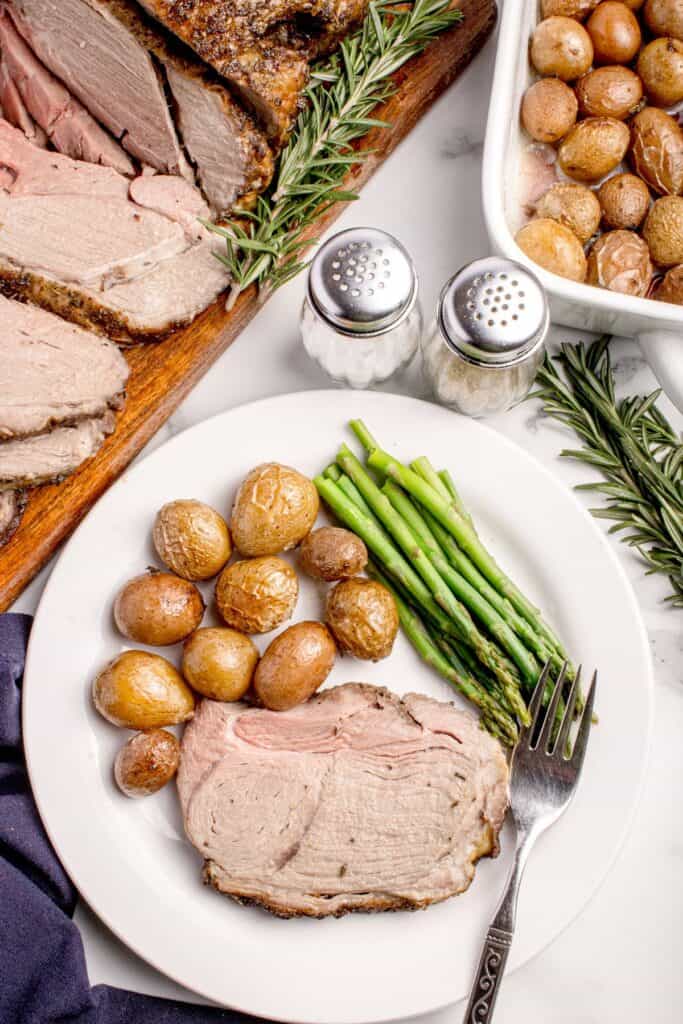
I love serving a leg of lamb roast with simple sides like roasted asparagus or artichoke salad and some fluffy homemade biscuits. It also pairs wonderfully with my pineapple casserole or green bean casserole for a cozier meal.
Boneless Leg of Lamb Recipe FAQs
What internal temperature do I need to roast leg of lamb to?
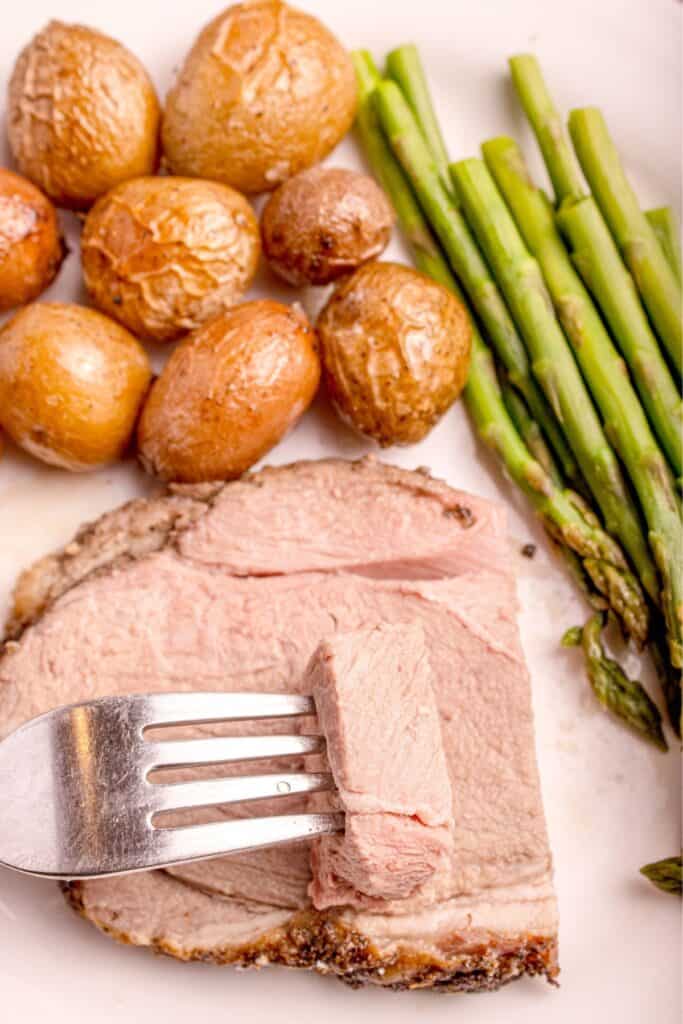
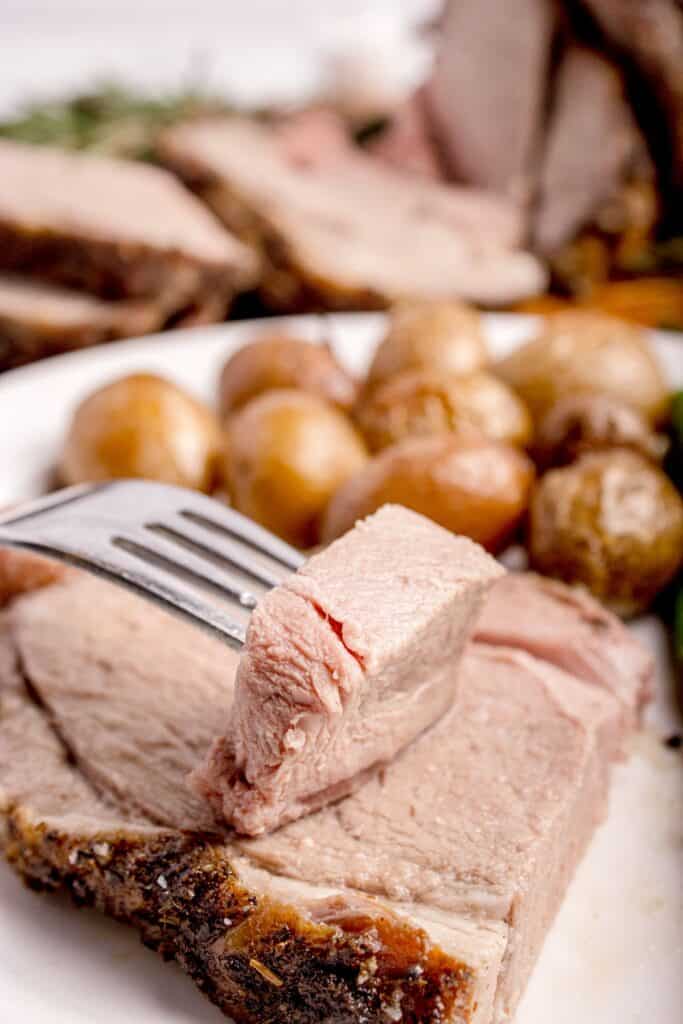
Lamb is typically served medium-rare, which is a temperature of 130-135 degrees F. I’ll often bump it up to medium when serving my kids, which is closer to 140-145 degrees F. Since the exact amount of time needed will depend on the weight of the meat, I always use a quick-read digital thermometer to test for doneness.
How should I store leftovers?
I store my leftover lamb in an airtight container and refrigerate it for up to 4 days. If I need to store it any longer, I move it to a freezer-safe bag and freeze it for up to 3 months. I highly recommend freezing some of the juice separately to help moisten reheated leftovers.
How do I reheat leftover boneless leg of lamb?
My favorite way to reheat this dish is in the oven between 275 and 300 degrees F. Covered with foil, it should take around 15 to 25 minutes until it is warmed through. If reheating small portions, I like to use the stovetop and add a splash of juice or broth to help bring back moisture.
More Easy Easter Recipes
Easy Boneless Leg of Lamb Recipe
Equipment
Ingredients
- 5 pound boneless leg of lamb tied
- 1 teaspoon garlic powder
- ½ teaspoon kosher salt
- ½ teaspoon freshly ground black pepper
- 1½ teaspoons chopped fresh rosemary or 1 teaspoon dried
- 1 teaspoon Italian seasoning
- 1 teaspoon lemon zest
- 2 tablespoons olive oil
- 2 tablespoons butter melted
- 3 pounds baby potatoes
Instructions
- Remove the lamb from the refrigerator 45–60 minutes before cooking. Doing this helps it cook evenly.
- Preheat the oven to 275 degrees F. Remember to position a rack in the center of the oven.
- In a small bowl, combine the garlic powder, kosher salt, black pepper, rosemary, Italian seasoning, and lemon zest. Mix them all until they are evenly blended.
- Pat the lamb dry with paper towels and then drizzle the olive oil over the lamb and rub it evenly over the entire surface. Sprinkle the seasoning mixture evenly over all sides, pressing gently so it sticks to the lamb.
- Place the lamb on a bed of potatoes or on a rack over a roasting pan, fat side up.
- Roast the lamb at 275 degrees F until its internal temperature reaches 130–135°F for medium-rare or 140–145°F for medium.This will take approximately 2½–3 hours, depending on the size of the roast and your oven. I like to begin checking the temperature after 2 hours.
- During the final 10–15 minutes of roasting, brush the lamb with the melted butter. This adds richness and helps with browning.
- Remove the lamb from the oven and loosely tent it with foil. Let it rest for 20 minutes to allow the juices to redistribute.
- Remove the twine. Slice the lamb against the grain and arrange it on a platter. Serve it warm and enjoy!
Notes
- Start with room temperature lamb to ensure even cooking. While the oven is preheating is the perfect time to let it sit out.
- Slice the meat against the grain after letting the juices redistribute.
- For deeper browning, broil the lamb for 2 to 3 minutes.
- Store leftovers in an airtight container in the fridge for up to 4 days.
- Reheat leftovers in the oven at 275 – 300 degrees F covered in foil, for about 15-25 minutes.
Nutrition
This nutrition information is based on the exact products I used in this recipe. Brands and sizes of products could alter exact nutrition and should always be calculated independently.